
Chapter Three
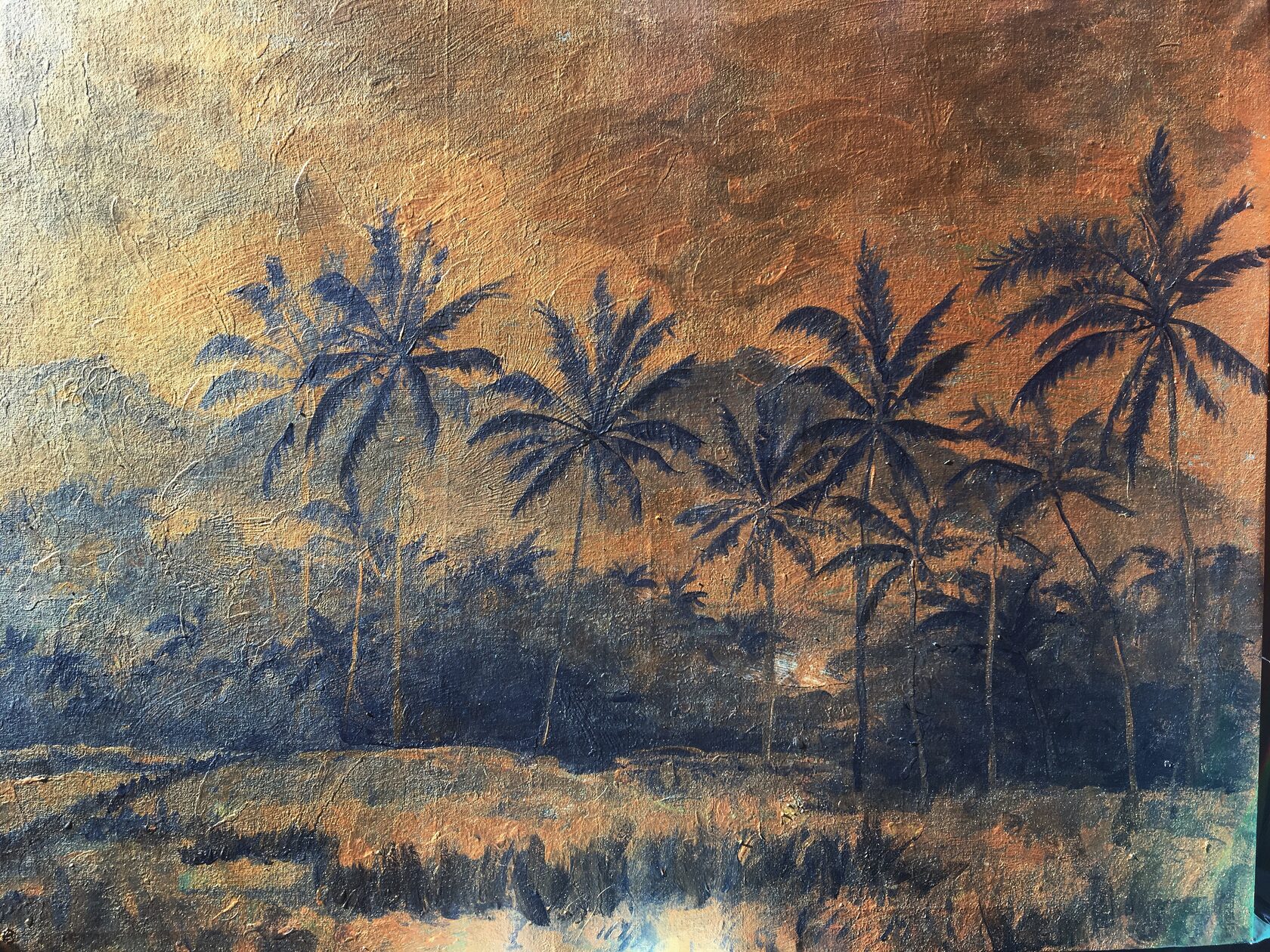
A Series of Paintings
Gold Dust
On memory, distance, and the light that remains when everything else has gone.
These paintings began in silence. Not the silence of an empty room, but the silence that settles over a place after you have left it — the particular quiet of distance, of time made visible.
I found myself returning to the Dutch East Indies paintings I had studied years before — the colonial landscapes with their forced serenity, their golden light that always felt borrowed. I wanted to take that light back. To paint from the inside of memory, not the outside of history.
Each work uses a deliberately restrained vocabulary: antique gold, Payne's Grey, texture, and almost nothing else. Enough to suggest a world. Not enough to explain it.
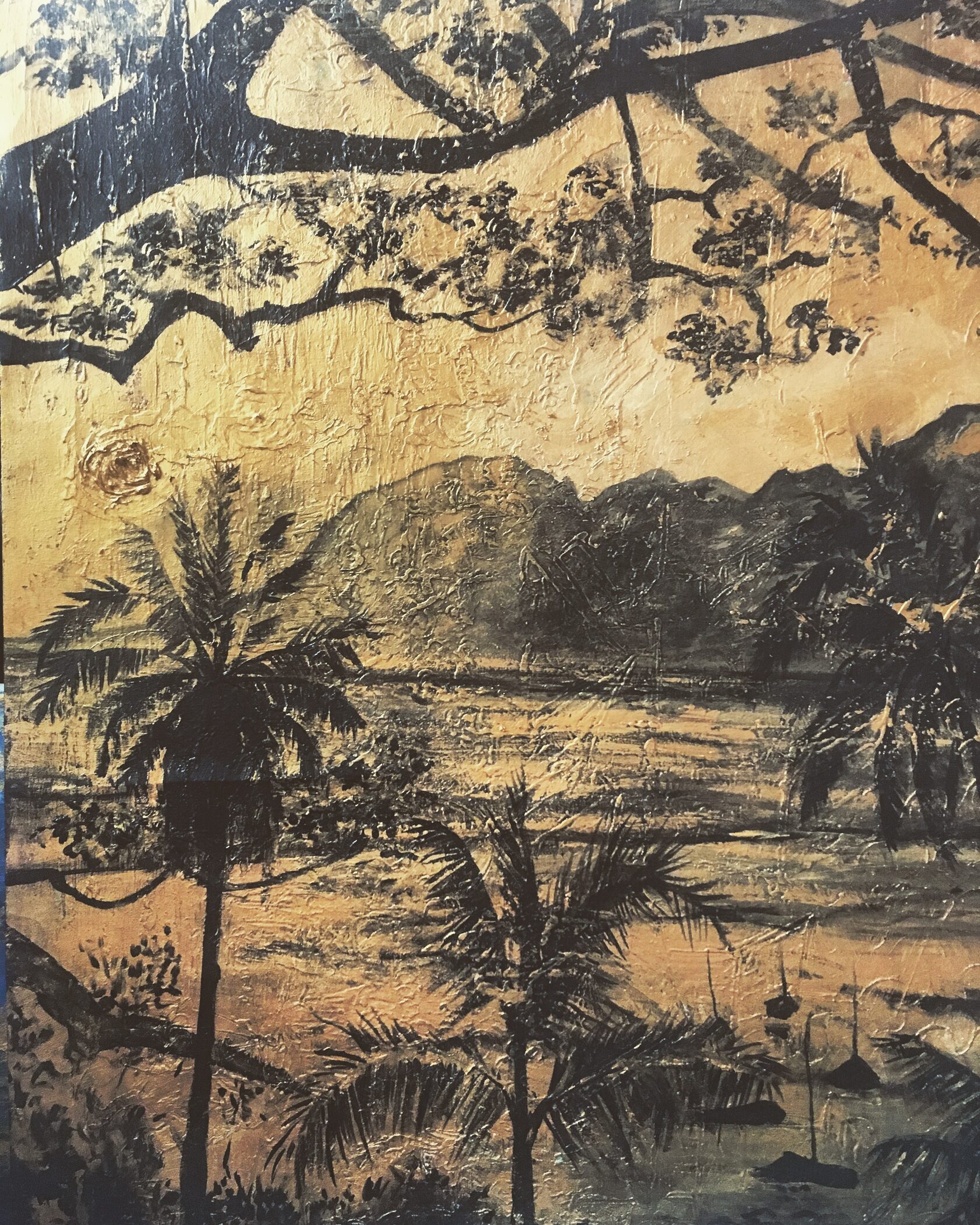
I. The Inheritance of Light
The first painting in the series, and the one that took the longest to find. I spent weeks preparing the gold ground — burnishing it until it held light the way water holds sky. The framing branches at the top reference the colonial compositional device: the European eye looking through foliage at a landscape it claims but does not belong to. Here, the frame is painted in the same grey as everything else. The viewer is inside the painting, not above it.
To paint gold is to paint silence. It is the colour of everything that has been loved and lost and held, finally, at a distance that makes it beautiful.
From the studio journal, March 2023
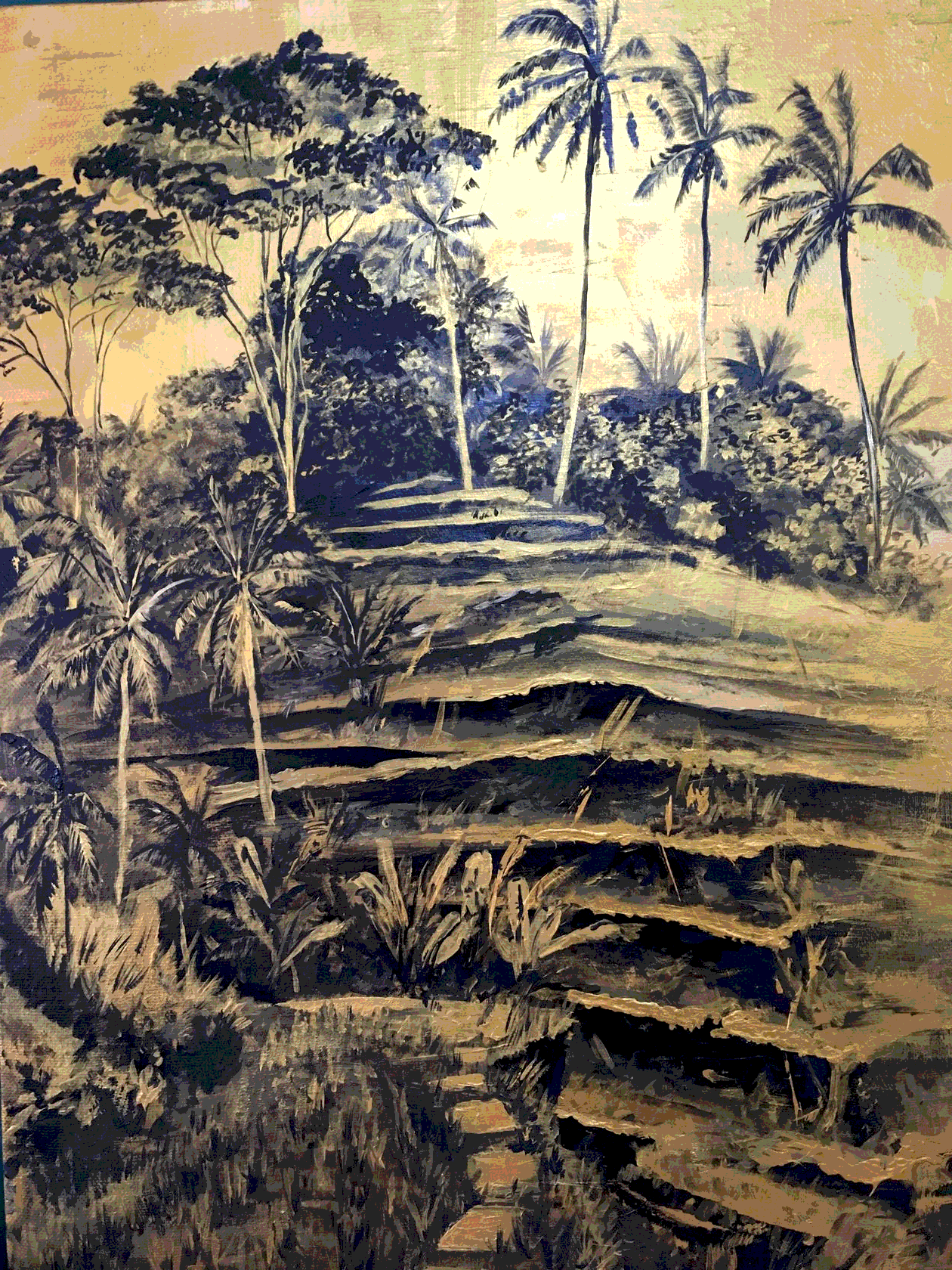
II. Interior, with Vanishing
The interior of the forest is an interior of the mind. I painted this during the monsoon season — watching rain dissolve the landscape outside my studio window, forms losing their edges, the world becoming suggestion. The vertical trunks are the only architecture left standing. Everything else is memory, already half-gone.
III. Saudade
The Portuguese word saudade — a longing for something you may never have had — became my compass. The beeswax medium creates a surface that is almost skin-like: warm, translucent, holding the memory of heat. The blue breaks through the gold like sky through clouds, like a place surfacing through the sediment of years. I scraped back layers until the painting felt less made than found — an artifact of feeling rather than an image of a place.
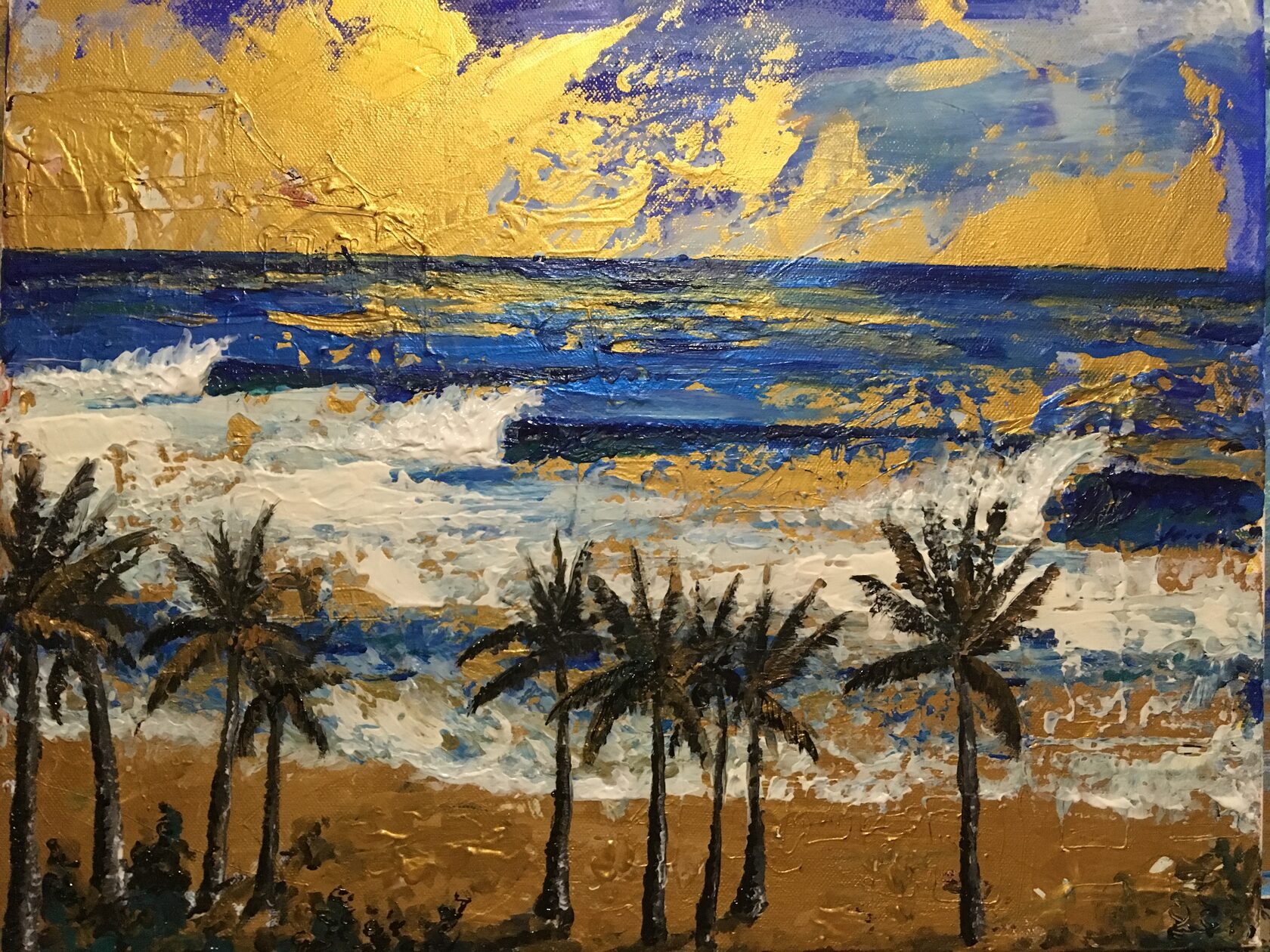
IV. The Horizon Between Here and There
The horizon line — where sea meets sky, where the known world ends — has appeared in every painting I have made about Indonesia. It is the most honest line a painter can draw: it says, here is where my sight stops, and everything beyond is faith. The gold leaf in the sky was applied wet, pressed into the paint so it lifts and tears with age. Already it is becoming what it describes: something beautiful, something disappearing.
The Dutch painters brought their grey skies with them. But the gold was always there — in the light, in the earth, in the distance between what was seen and what was remembered.
Exhibition text, 2024
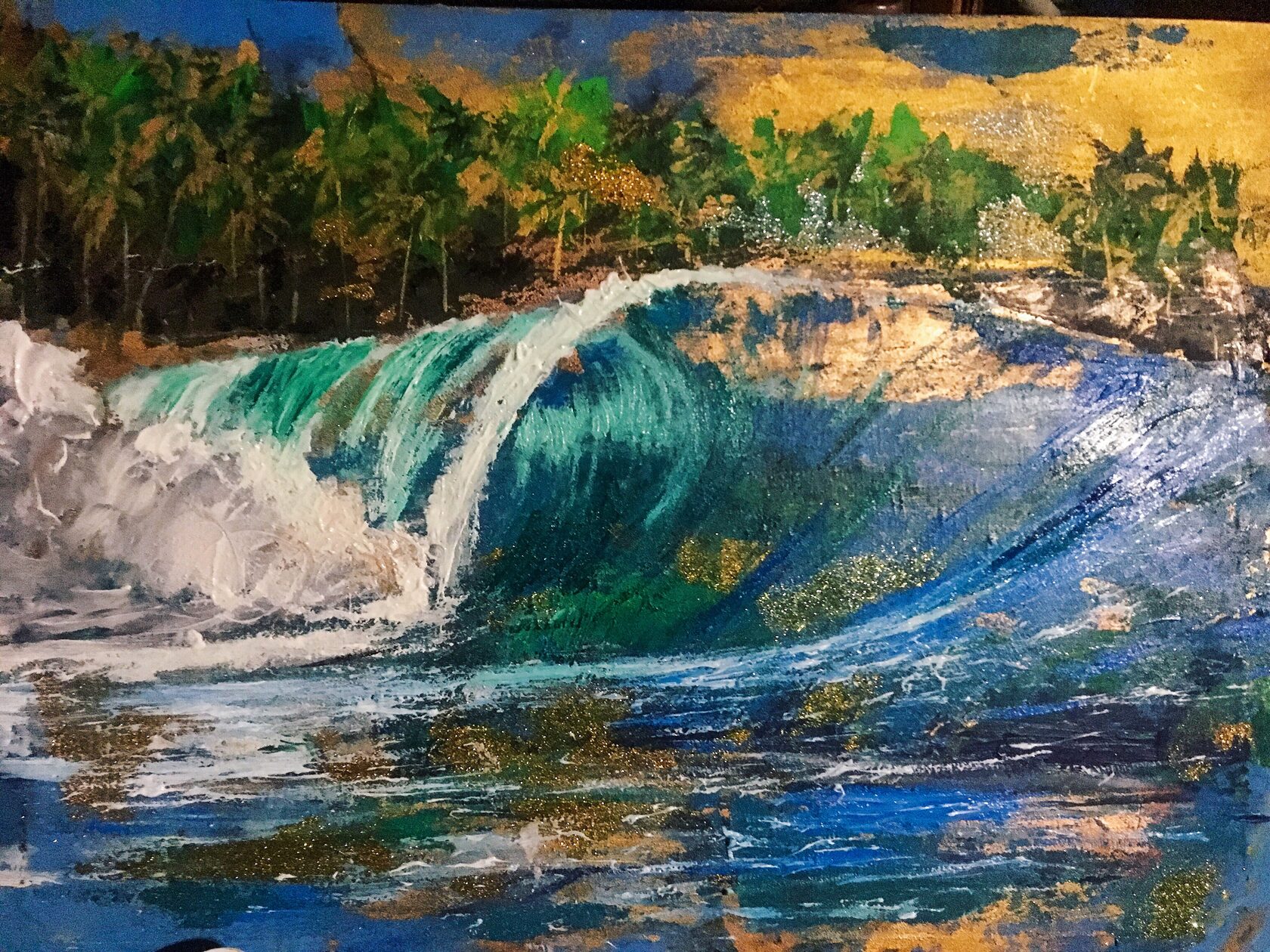
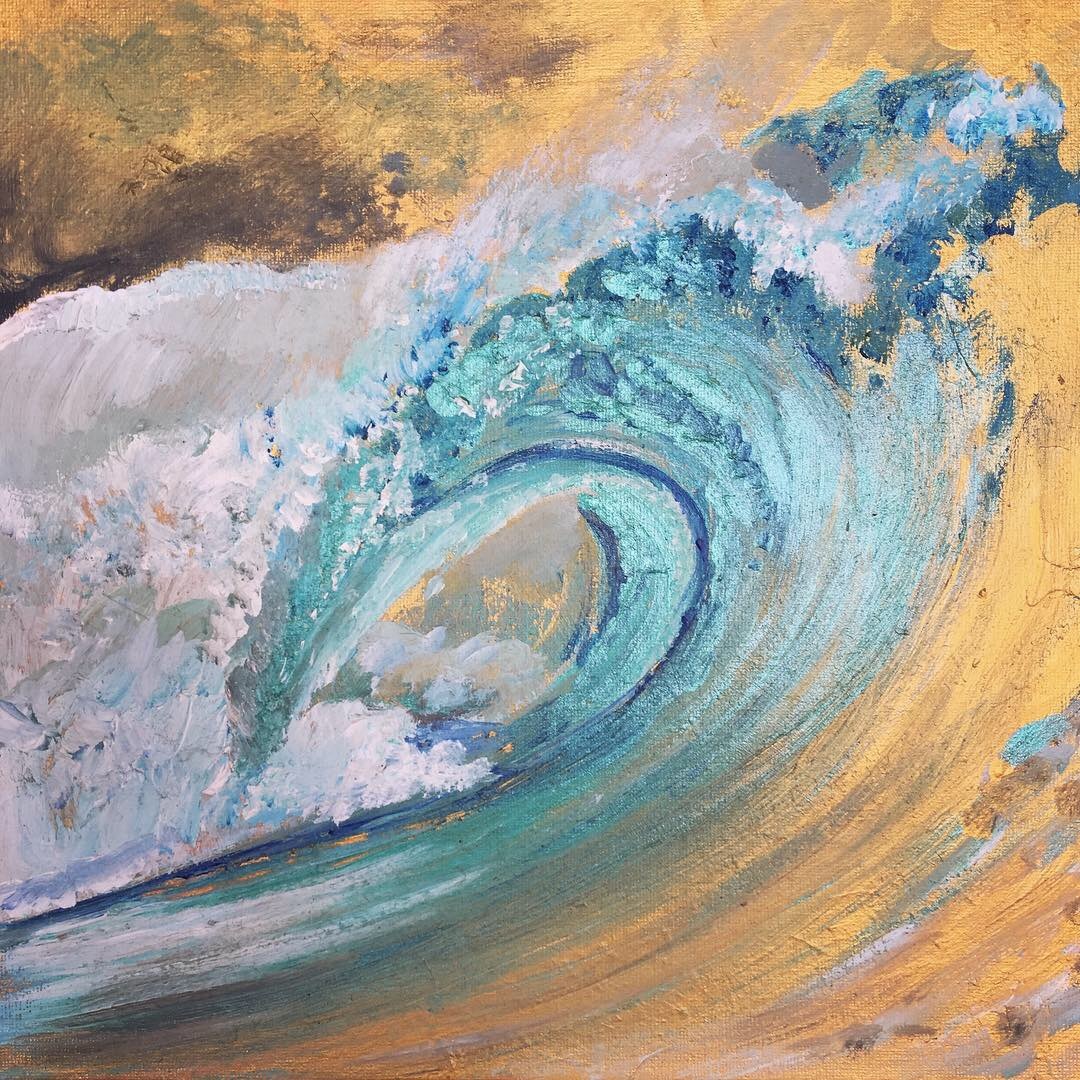
V. What the Water Remembers
This painting is about power and restraint. The wave is a moment of enormous energy, but I painted it slowly — each layer of green and blue applied, then partially covered with gold, then scraped back. The gold doesn't decorate the water; it competes with it. The way memory competes with the present, sometimes winning, sometimes losing, always transforming what it touches. The impasto in the foam is the thickest paint on the canvas. I wanted the spray to have weight.
A Figure in the Gold
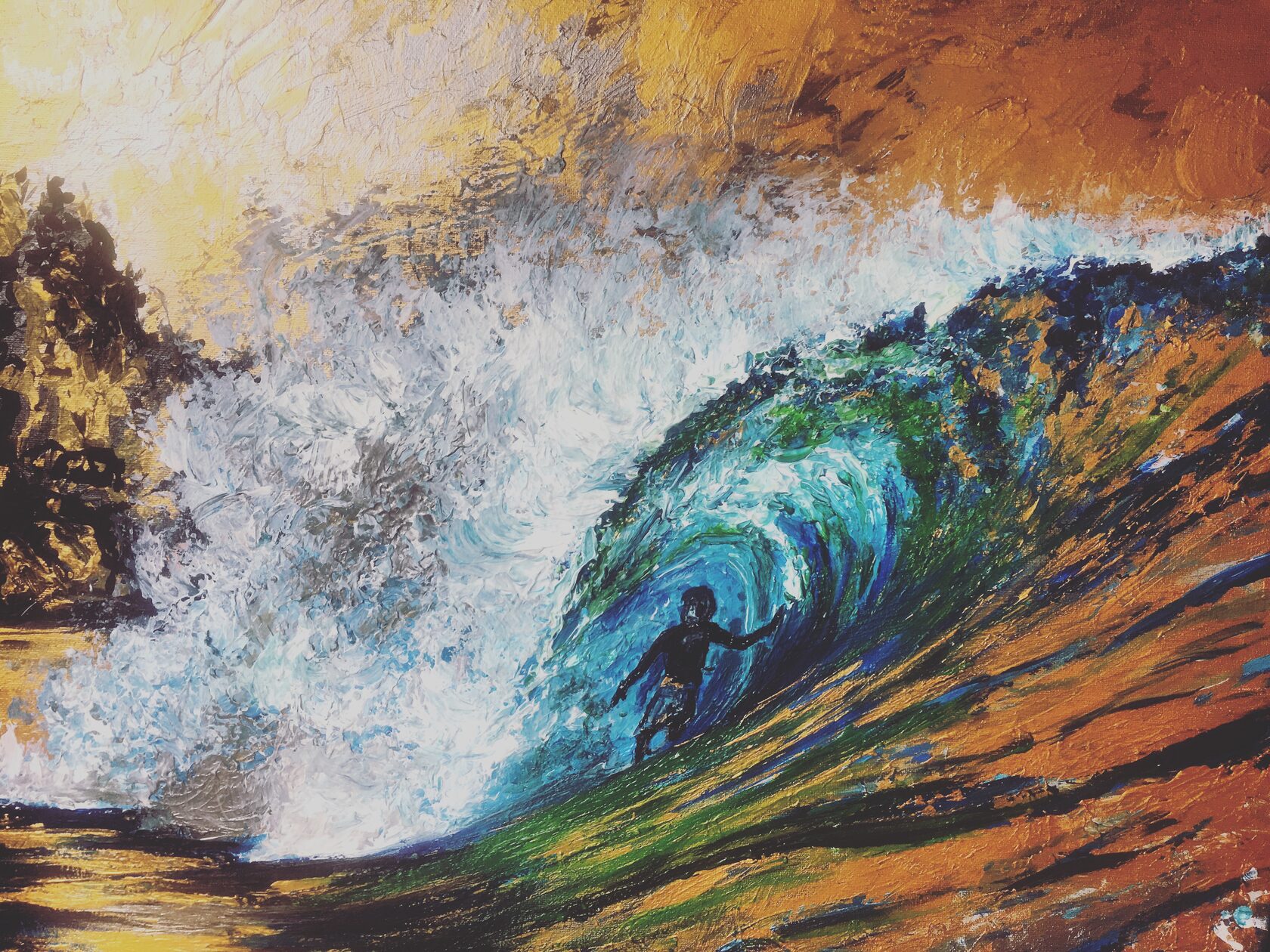
VI. The Swimmer
The only painting in the series with a human figure. I resisted it for months — the figure changes everything, introduces narrative into what I wanted to keep abstract. But the figure appeared anyway, small against the wave, silhouette only. Not a portrait, not a person. A marker of scale. A way of saying: this is how it feels to be inside the gold, inside the memory, inside the moment before the wave breaks. The smallest painting in the series. The one I could not stop making.
Process
Studies and the quiet work of finding what the painting wants to become.
Detail: layered gold beneath the surface
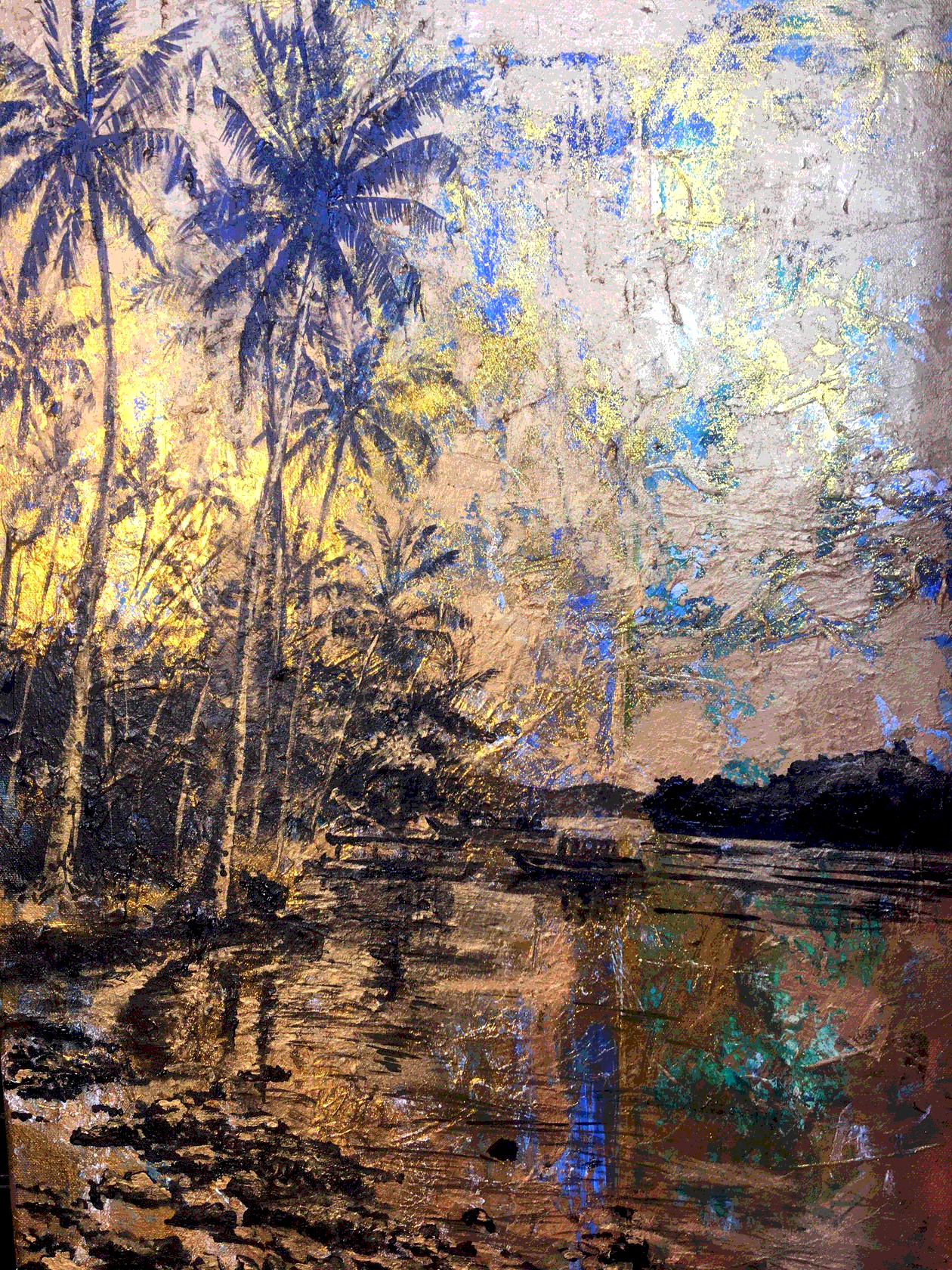
Scraped back: what remains when paint is removed
Every painting in this series is an act of letting go — of certainty, of control, of the need to make the invisible visible. What remains is gold dust: the residue of light, the evidence of time, the quiet proof that some things endure precisely because we cannot hold them.
VI of VII paintings
